Rafael Krüger · 14 September 2026
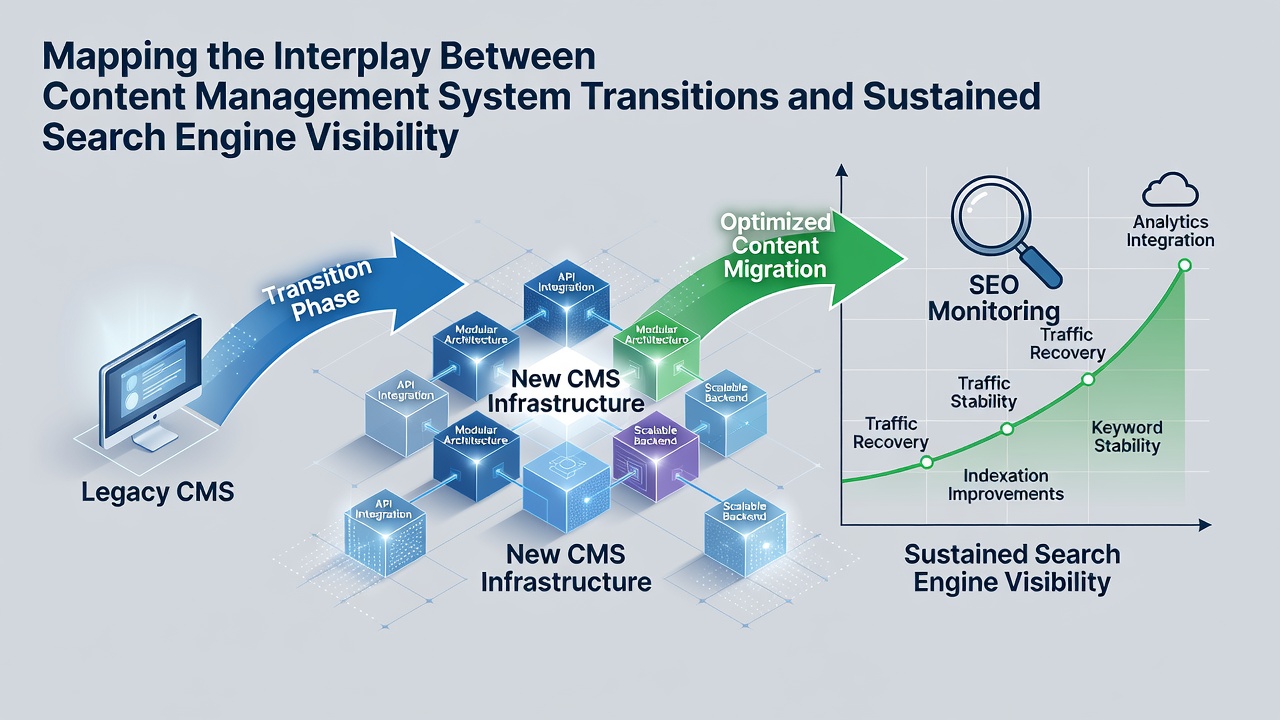
Mapping the Interplay Between Content Management System Transitions and Sustained Search Engine Visibility
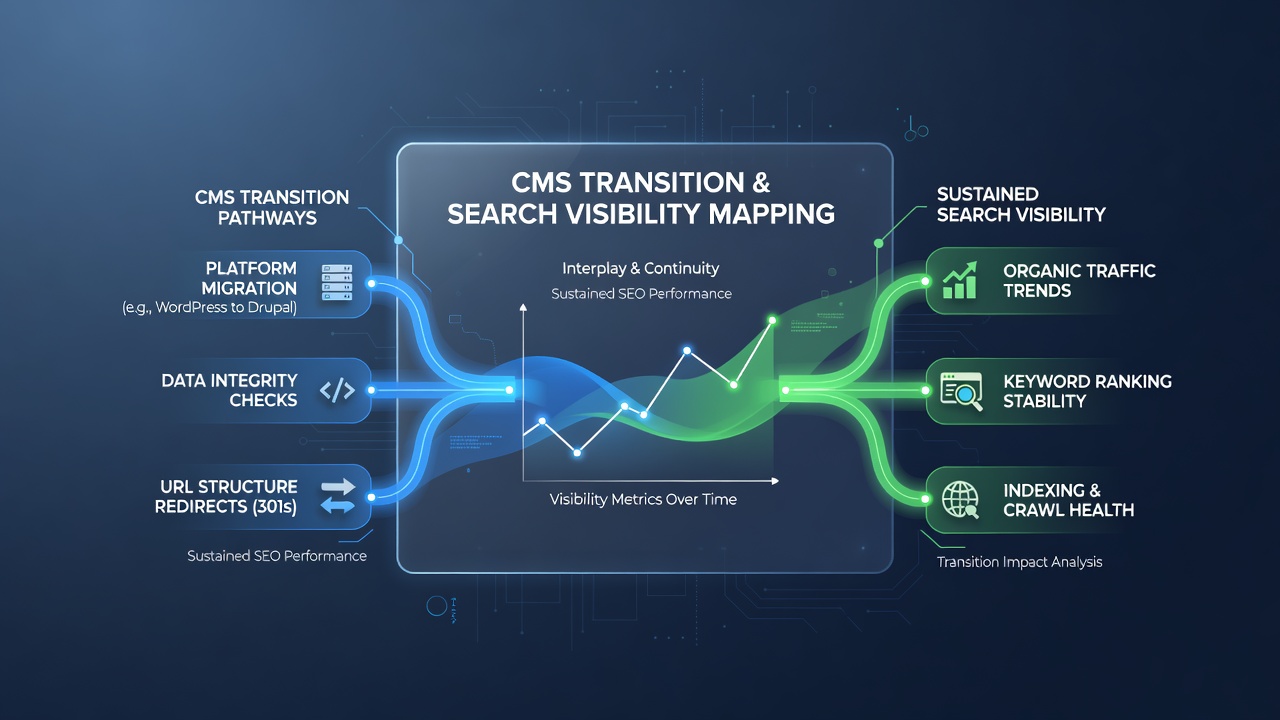
Content management system transitions represent a critical juncture for websites seeking to maintain search engine visibility over extended periods, and data from multiple industry reports shows that such changes often trigger fluctuations in organic traffic when not managed with precise technical adjustments. Researchers at various academic institutions have tracked these shifts across thousands of domains, revealing patterns where URL structures, metadata handling, and indexing signals become disrupted during platform switches.
Organizations that migrate from one CMS to another must address core elements like site architecture and crawl directives immediately, since studies indicate that delays in these areas can extend recovery timelines beyond six months in competitive niches. As of September 2026, ongoing analyses from digital infrastructure trackers continue to highlight how platforms such as WordPress, Drupal, and custom-built systems each introduce unique variables that influence how search engines re-evaluate page authority and relevance signals.
Technical Foundations of CMS-Driven Ranking Dynamics
Search engine algorithms prioritize consistency in content delivery and site responsiveness during any backend overhaul, which means that redirects, canonical tags, and XML sitemap updates form the backbone of sustained visibility efforts. Evidence from longitudinal tracking projects demonstrates that sites preserving historical URL patterns through 301 redirects experience fewer ranking drops compared to those implementing full structural overhauls without equivalent mapping.
Those who have studied migration outcomes across sectors note that mobile-first indexing amplifies the stakes, because new CMS frameworks sometimes alter rendering speeds or schema markup implementation in ways that affect how pages appear in results. Data indicates that incorporating structured data early in the transition process helps maintain rich snippet eligibility, a factor that directly correlates with click-through rates according to aggregated performance metrics.
Case Patterns in Visibility Recovery
One documented instance involved a mid-sized e-commerce operation that shifted to a headless CMS architecture and subsequently observed a 40 percent dip in indexed pages until server log analysis identified crawl budget inefficiencies. Observers tracking similar scenarios report that reinstating proper internal linking hierarchies and optimizing image compression pipelines often restores prior visibility levels within eight to twelve weeks when combined with targeted content audits.
Another pattern emerges when legacy systems carry over outdated plugin dependencies that conflict with modern SEO requirements, leading to duplicate content issues or slowed page load times. Figures from performance monitoring tools reveal that sites addressing these conflicts proactively through pre-launch staging environments tend to stabilize rankings faster than those discovering problems post-migration.
Strategic Sequencing for Long-Term Stability
Planning a CMS transition requires mapping every content asset against its corresponding search performance history, a step that allows teams to prioritize high-value pages during the cutover process. Research indicates that integrating SEO audits at each milestone—from initial data export through final deployment—reduces the likelihood of indexing gaps that compound over time.
Monitoring tools deployed before and after the switch provide comparative benchmarks, and those benchmarks help identify whether changes in domain authority or backlink profiles stem directly from the platform alteration rather than external factors. What's interesting is how regional regulatory frameworks, including guidelines from the Canadian digital economy reports, emphasize transparent data handling during such transitions to avoid secondary impacts on user trust metrics that indirectly influence rankings.
Additional insights drawn from Australian Bureau of Statistics publications on technology adoption further illustrate that enterprises investing in post-migration testing protocols maintain steadier traffic trajectories across diverse search landscapes. These protocols typically encompass crawl simulation, mobile usability verification, and core web vitals assessment conducted in controlled environments.
Conclusion
Effective mapping of CMS transitions against sustained search engine visibility hinges on methodical preparation and continuous measurement, elements that together minimize disruption while preserving established performance baselines. Organizations that align technical migrations with established indexing best practices demonstrate more predictable outcomes across extended observation periods.